
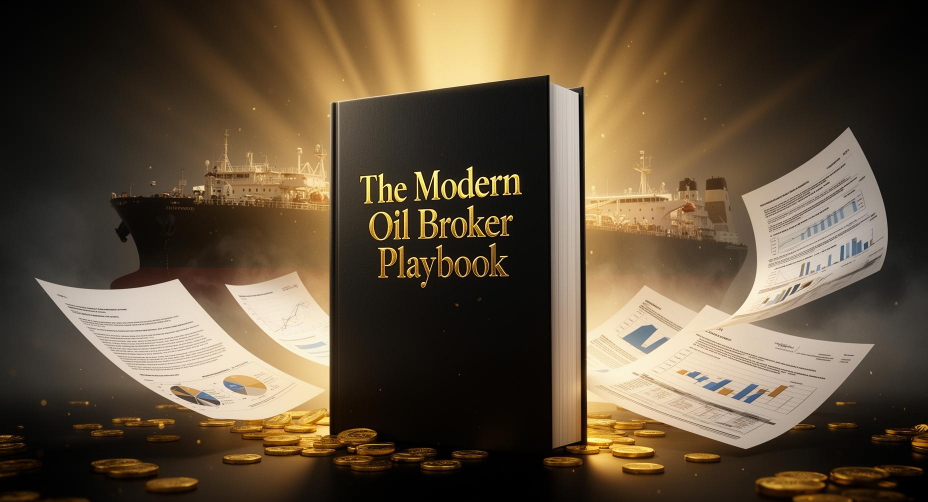
The Modern Oil Broker Playbook
Introduction
The global energy market has evolved rapidly over the last decade. Traditional oil trading methods built on handshake deals, opaque pricing, and limited networks are no longer sufficient. Digital transformation, compliance regulations, geopolitical volatility, and data-driven decision-making have reshaped the industry.
The Modern Oil Broker Playbook is a strategic framework designed for today’s energy intermediaries who want to operate professionally, profitably, and sustainably. Whether you are entering the oil brokerage business or refining your current operations, this guide delivers a comprehensive roadmap covering positioning, deal structuring, compliance, risk management, client acquisition, and long-term scaling.
This is not about outdated tactics. It’s about building a serious brokerage operation aligned with modern global standards.
1. Understanding the Modern Oil Brokerage Landscape
Oil brokerage today operates within a complex ecosystem that includes:
Refineries
National oil companies (NOCs)
Private trading houses
Shipping companies
Inspection agencies
Financial institutions
Compliance regulators
Unlike the past, access alone is no longer a competitive advantage. Information is widely available. What differentiates a modern broker is:
Verified relationships
Speed of execution
Compliance awareness
Structured deal flow
Transparent communication
The oil broker’s role has shifted from simple “middleman” to strategic facilitator. Your value lies in aligning buyer requirements with verified suppliers while ensuring smooth documentation and transaction security.
2. Building a Strong Professional Foundation
Before chasing large transactions, your operational foundation must be solid.
Legal Structure
Register a proper company entity.
Obtain necessary trading or intermediary licenses (depending on jurisdiction).
Ensure you have corporate documentation ready: incorporation certificate, tax ID, corporate profile.
Professionalism begins with structure.
Documentation Systems
Maintain standardized templates for:
Non-Disclosure Agreements (NDAs)
Irrevocable Corporate Purchase Orders (ICPOs)
Letters of Intent (LOIs)
Soft Corporate Offers (SCOs)
Full Corporate Offers (FCOs)
A broker who understands documentation flow earns respect quickly.
Digital Presence
Today’s buyers and suppliers will research you online. A professional website, corporate email address, and verified LinkedIn presence increase credibility dramatically.
3. Positioning Yourself in the Market
Not all brokers succeed because they lack a defined niche. The modern approach requires clarity.
Choose Your Focus
Instead of handling every product, consider specializing in:
EN590 (diesel)
Jet fuel (Jet A1)
Crude oil
LPG
LNG
Depth of knowledge builds trust.
Geographic Strategy
Decide whether you will focus on:
African supply routes
Middle East exports
Russian-origin products
Asian buyers
European refineries
Geographic specialization enhances efficiency and network quality.
4. Relationship Capital: The Core Asset
In oil brokerage, relationships are more valuable than marketing budgets.
Vet Your Suppliers
Work only with:
Verified refinery mandates
Direct title holders
Officially authorized representatives
Always request proof of authority before presenting any offer to buyers.
Qualify Your Buyers
Avoid time-wasters by ensuring buyers can:
Provide ICPO with bank details
Demonstrate financial capability
Comply with transaction procedures
Modern brokers pre-qualify both sides to avoid collapsed deals.
5. Deal Flow and Transaction Structure
One of the biggest failures in brokerage is misunderstanding transaction flow.
A simplified structure often looks like:
Buyer submits LOI or ICPO
Seller issues FCO
Buyer signs and returns
Contract drafted and signed
Payment instrument issued (SBLC, LC, etc.)
Shipment and inspection
Payment release
Understanding Incoterms (FOB, CIF, TTO) is essential. Each term changes responsibility, insurance coverage, and risk allocation.
The Modern Oil Broker Playbook emphasizes mastering procedural clarity. Confusion destroys credibility.
6. Compliance and Risk Management
Today’s oil trade is heavily regulated.
Sanctions Awareness
You must understand:
International sanctions lists
Restricted countries
Blacklisted companies
Failing compliance can lead to frozen funds and legal exposure.
KYC and AML
Conduct basic due diligence:
Company registration verification
Bank confirmation
UBO (Ultimate Beneficial Owner) checks
Modern brokers integrate compliance into their workflow instead of treating it as an afterthought.
7. Financial Instruments and Payment Security
Oil transactions involve large sums. Understanding payment mechanisms is non-negotiable.
Common instruments include:
SBLC (Standby Letter of Credit)
DLC (Documentary Letter of Credit)
MT103
Bank Guarantee (BG)
As a broker, your role is not to provide financial advice but to ensure both parties agree on a secure, workable structure.
Never promise what you cannot control. Instead, facilitate clarity between financial institutions.
8. Commission Structures and Protection
Your income depends on commission agreements being clearly defined.
Key Principles
Include commission clauses in the main contract.
Use Irrevocable Master Fee Protection Agreements (IMFPA).
Work with escrow when necessary.
Avoid handshake-only commission promises.
Commission disputes are common in oil brokerage. Written agreements prevent future conflicts.
9. Leveraging Technology in Modern Brokerage
Digital tools have transformed energy trading.
CRM Systems
Track:
Leads
Documentation stages
Follow-ups
Deal status
Organization increases closing ratios.
Market Intelligence Tools
Monitor:
Brent crude prices
Platts reports
Regional supply disruptions
Informed brokers negotiate from a position of strength.
Secure Communication
Use encrypted communication platforms when discussing sensitive deals. Confidentiality is critical.
10. Building Authority and Long-Term Reputation
Short-term profits are tempting, but reputation compounds.
Deliver Reliability
Respond promptly.
Share only verified information.
Never exaggerate supply capacity.
Thought Leadership
Consider:
Publishing industry insights
Hosting energy webinars
Networking at oil and gas conferences
Authority positions you as a serious market participant rather than a random intermediary.
11. Common Mistakes to Avoid
Many aspiring brokers fail because they:
Present fake refinery documents.
Forward unverified SCOs.
Skip compliance checks.
Rely entirely on social media leads.
Lack contract knowledge.
Professionalism and patience outperform shortcuts.
The Modern Oil Broker Playbook stresses sustainable credibility over quick, risky deals.
12. Scaling Beyond Single Transactions
Once you successfully close transactions, focus on scalability.
Strategic Partnerships
Form alliances with:
Shipping companies
Storage facility operators
Inspection agencies
Integrated service capability increases your value.
Repeat Buyers
Retain clients by:
Offering consistent pricing updates
Providing faster turnaround
Maintaining transparency
Recurring business stabilizes income.
13. Negotiation Mastery
Oil brokerage requires high-level negotiation skills.
Effective negotiation includes:
Understanding pricing formulas (Platts minus/plus structures)
Identifying buyer urgency
Knowing supplier flexibility margins
Managing expectations realistically
Confidence backed by data is persuasive.
14. Crisis Management and Market Volatility
Energy markets are affected by:
Wars
OPEC decisions
Shipping disruptions
Sanctions
Modern brokers anticipate volatility rather than react emotionally.
Risk mitigation strategies include:
Diversified supplier networks
Flexible contract clauses
Clear force majeure understanding
Prepared brokers survive market shocks.
15. Mindset of a Modern Oil Broker
Success in this industry requires:
Patience
Strategic thinking
Emotional discipline
Strong ethics
Deals may take months to close. Many will collapse. Persistence, professionalism, and continuous improvement separate winners from amateurs.
Conclusion
The oil brokerage industry remains one of the most lucrative sectors in global trade, but it has matured significantly. Information transparency, regulatory scrutiny, and technological evolution demand a higher standard of operation.
The Modern Oil Broker Playbook is about adapting to these realities. It provides a blueprint for building a legitimate, scalable, and respected brokerage business rooted in compliance, structured processes, relationship management, and strategic growth.
If implemented correctly, these principles transform brokerage from speculative hustle into a sustainable enterprise.
Success is not about chasing random deals. It is about building systems, mastering documentation, protecting commissions, managing risk, and cultivating trusted relationships.
In a market driven by precision and credibility, professionalism is your most powerful asset.




Reviews
There are no reviews yet.