
Introduction
The digital world is full of data — from user clicks and impressions to keyword rankings and conversion reports. But having data isn’t the same as using it effectively. The real power lies in converting those numbers into decisions that improve visibility, efficiency, and growth. That’s where a structured approach to analytics within SEO becomes essential.
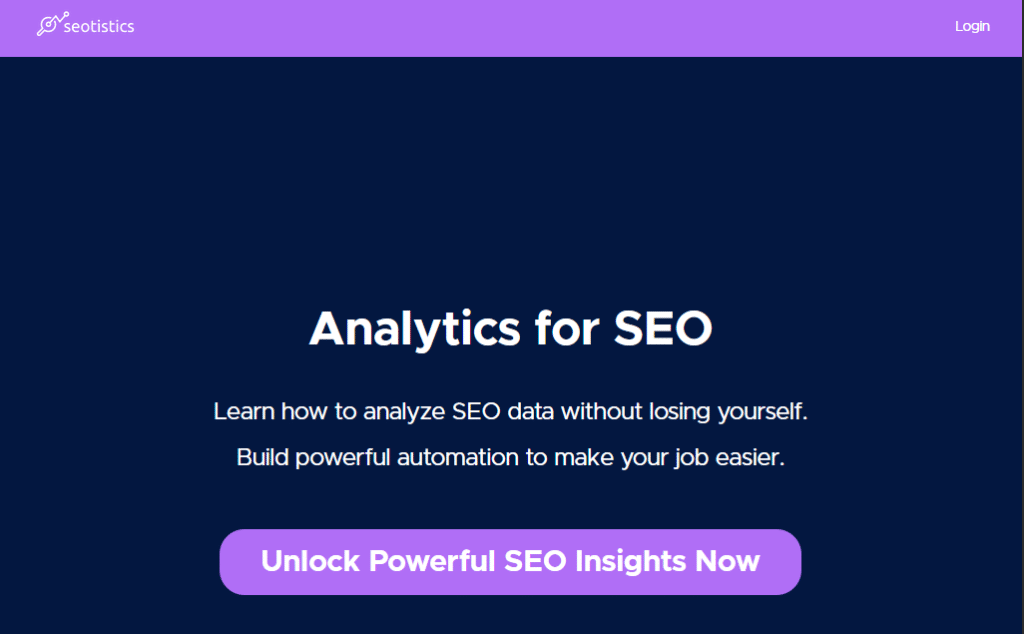
In this detailed guide, we explore the ideas behind Marco Giordano – Analytics For SEO, a concept that connects deep data analysis with practical SEO strategy. You’ll learn how to audit your site, monitor trends, automate processes, and make data a core part of your SEO decision-making. By the end, you’ll understand how to move beyond “data collection” into real-world application.
1. Why SEO Analytics Matters More Than Ever
SEO has shifted from being keyword-driven to data-driven. It’s no longer about guessing what works — it’s about proving it. Every website generates thousands of data points every day: which pages perform well, where users drop off, which queries bring traffic, and how those behaviors evolve over time.
Without proper analytics, SEO becomes blind navigation. Analytics provides context — it answers not just what happened but why it happened and what should happen next. This is the key principle behind a data-first SEO approach: every action should be measurable, repeatable, and scalable.
2. The Mindset: From Reporting to Understanding
A major takeaway from advanced analytics frameworks is that reporting alone isn’t enough. Many teams spend hours preparing dashboards, yet fail to extract real insight.
True SEO analytics means:
Asking the right questions about what the data is showing.
Connecting numbers to business goals (revenue, leads, conversions).
Treating data as part of a feedback loop — measure, act, refine, repeat.
In short, don’t just count the numbers — interpret them. The focus should be on building a process that links analytics to decision-making rather than creating fancy charts that no one uses.
3. Core Framework: Audit, Monitor, Automate
Step 1: Audit Your Content and Site Structure
A comprehensive audit is the foundation. The goal is to identify patterns, decay, and missed opportunities.
Key actions:
Content Decay Analysis: Track pages that used to perform well but are losing visibility. If organic clicks or impressions are declining, investigate freshness, competition, or intent mismatch.
Cannibalization Detection: Identify multiple pages targeting similar keywords or queries. Merge or re-optimize to strengthen signals.
Internal Linking Review: Ensure link equity flows to important pages and that no valuable content remains orphaned.
Page Classification: Group pages into performance categories — growing, stable, decaying, or redundant.
This transforms a messy website into a clear map of priorities.
Step 2: Monitor and Measure Trends
Instead of looking at static numbers, monitor trends over time.
Track:
Click Growth: Measure trajectory, not just totals. A rising slope indicates improving performance, while a flat or declining slope shows decay.
Impression Patterns: Detect seasonal or algorithm-related shifts.
CTR (Click-Through Rate): Low CTR despite high impressions signals weak meta titles or irrelevant results.
Conversion Rate: Measure the business impact of traffic, not just the volume.
Monitoring helps predict problems before they become crises. A consistent system ensures you don’t just “check analytics” — you use it as an early warning system.
Step 3: Automate to Scale
Manual reports work for small sites, but not for large ones. Automation helps you scale insights across thousands of pages.
How to automate effectively:
Build automated data pipelines that pull data from Google Search Console and Analytics.
Create dashboards that update daily or weekly.
Set up automated alerts for sudden drops or spikes in traffic.
Use simple scripts or workflow tools to detect patterns like content decay, broken links, or missing metadata.
Automation frees up time to focus on insights rather than repetitive reporting.
4. The Practical Roadmap
Step 1: Define Goals
Every analytics process should start with the question — what are we trying to achieve?
Examples:
Increase organic leads by 20%.
Boost conversion rate from blog traffic.
Recover decayed content visibility.
When goals are defined, every metric gains meaning. For instance, tracking impressions makes sense only if your goal is awareness; tracking conversions makes sense if you’re optimizing for sales.
Step 2: Extract and Organize Data
Collect data from all relevant sources — analytics platforms, SEO tools, or CRM systems. Then, clean and categorize it.
For example:
Pull clicks, impressions, and average positions from your search data.
Add engagement metrics (time on page, bounce rate) from analytics reports.
Classify each URL by type (blog, product, service, location, etc.).
Combining these sources provides a unified view of your SEO landscape.
Step 3: Classify Pages and Prioritize
Once your data is structured, classify each page based on performance metrics:
High Opportunity: High impressions, low clicks — improve titles and descriptions.
High Value: Brings conversions — protect and strengthen these pages.
Decaying: Losing clicks — refresh or restructure content.
Low Value: No impressions or conversions — consider redirecting or pruning.
Prioritization ensures time and resources go where the impact is highest.
Step 4: Create Actionable Insights
Turn observations into actions. Example insights might include:
“Pages about older product versions are decaying — update to reflect current features.”
“Blog posts with question-type titles have higher CTR — replicate that pattern.”
“Regional pages underperform — internal linking or localization may be weak.”
Every data insight should translate into a clear, measurable action item.
Step 5: Reporting and Continuous Improvement
Finally, establish a reporting cadence. Monthly or quarterly reviews help track whether actions led to improvement. Use dashboards to visualize growth and spot new trends.
Analytics is never one-and-done. It’s a living process that evolves with every algorithm update and user-behavior shift. The more you iterate, the more accurate and predictive your SEO strategy becomes.
5. Tools That Bring Analytics to Life
You don’t need fancy tools to start, but understanding how to use them effectively matters.
Commonly used options include:
Google Search Console: For keyword, query, and URL-level performance.
Google Analytics 4: For engagement and conversion tracking.
Looker Studio / Power BI: For creating dynamic dashboards.
Spreadsheet or Database Tools: To join and analyze multiple data sources.
Automation Scripts: For alerting and pattern detection.
The real secret is not the tool — it’s the system you build around it.
6. Advantages of a Data-Driven SEO Approach
Strategic Clarity: You know exactly where to focus efforts for the highest return.
Faster Execution: Automated pipelines and structured audits reduce manual work.
Scalability: Works equally well for small websites and massive enterprises.
Actionable Results: Each insight connects to an actionable next step.
Continuous Learning: Trends and outcomes help refine future strategies.
In short, analytics transforms SEO from a guessing game into a measurable business discipline.
7. Common Mistakes to Avoid
Even experienced professionals fall into data traps. Avoid these pitfalls:
Over-reliance on vanity metrics: Traffic doesn’t equal success if it doesn’t convert.
Ignoring context: Numbers mean little without knowing the why behind them.
Manual overload: Spending hours on data cleaning kills productivity — automate instead.
Lack of follow-through: Insights must turn into actions, or they’re just noise.
No iteration: SEO is dynamic; one-time audits quickly become outdated.
The goal isn’t just to analyze — it’s to improve continuously.
8. Who Benefits the Most
This data-driven framework benefits:
SEO professionals who want deeper insight into performance trends.
Marketing teams struggling to connect analytics to revenue.
Agencies managing large content portfolios.
Businesses scaling their online presence across multiple markets.
Developers and analysts who want to apply data science to SEO.
Whether you manage a small blog or a global e-commerce brand, a structured analytics approach improves decision-making and ROI.
9. The Future of SEO Analytics
The future of SEO is automation and prediction. As AI and big data tools become more integrated, analytics will evolve from descriptive to prescriptive — meaning systems will not only show what happened but also suggest what to do next.
We’re entering a time when SEO professionals will need analytical thinking as much as creative skills. Understanding user intent, modeling content decay, and linking performance data with business metrics will define the next generation of SEO leaders.
10. Final Thoughts
Analytics isn’t about numbers; it’s about clarity. When you combine structured data, automation, and strategic thinking, you transform SEO from guesswork into science.
The Marco Giordano – Analytics For SEO approach represents a shift in how we think about optimization — not as isolated tactics, but as a continuous feedback system that links every data point to business growth.
Start small: run a simple audit, build a dashboard, track a few key metrics. Then iterate, expand, and refine. Over time, you’ll build a system that works like an engine — constantly learning, adapting, and driving your SEO to new heights.




Reviews
There are no reviews yet.